
By Eileen Legaspi-Ramirez, The Ohome Collective and Gantala Press
The following text and video works are part of a joint contribution to the Womanifesto Way Anthology by The Ohome Collective, Gantala Press and Eileen Legaspi-Ramirez. To explore this contribution and its relations click here.
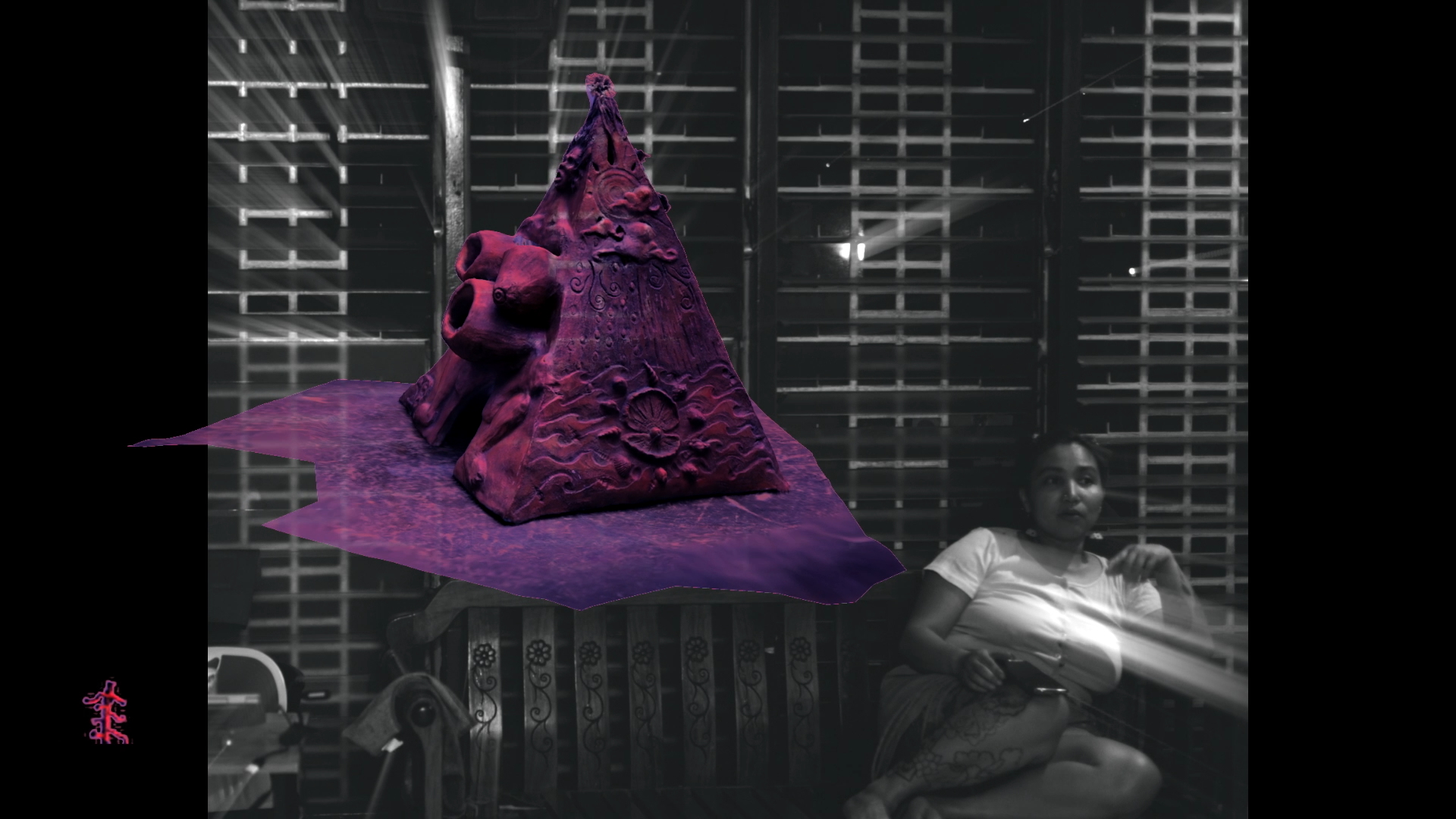
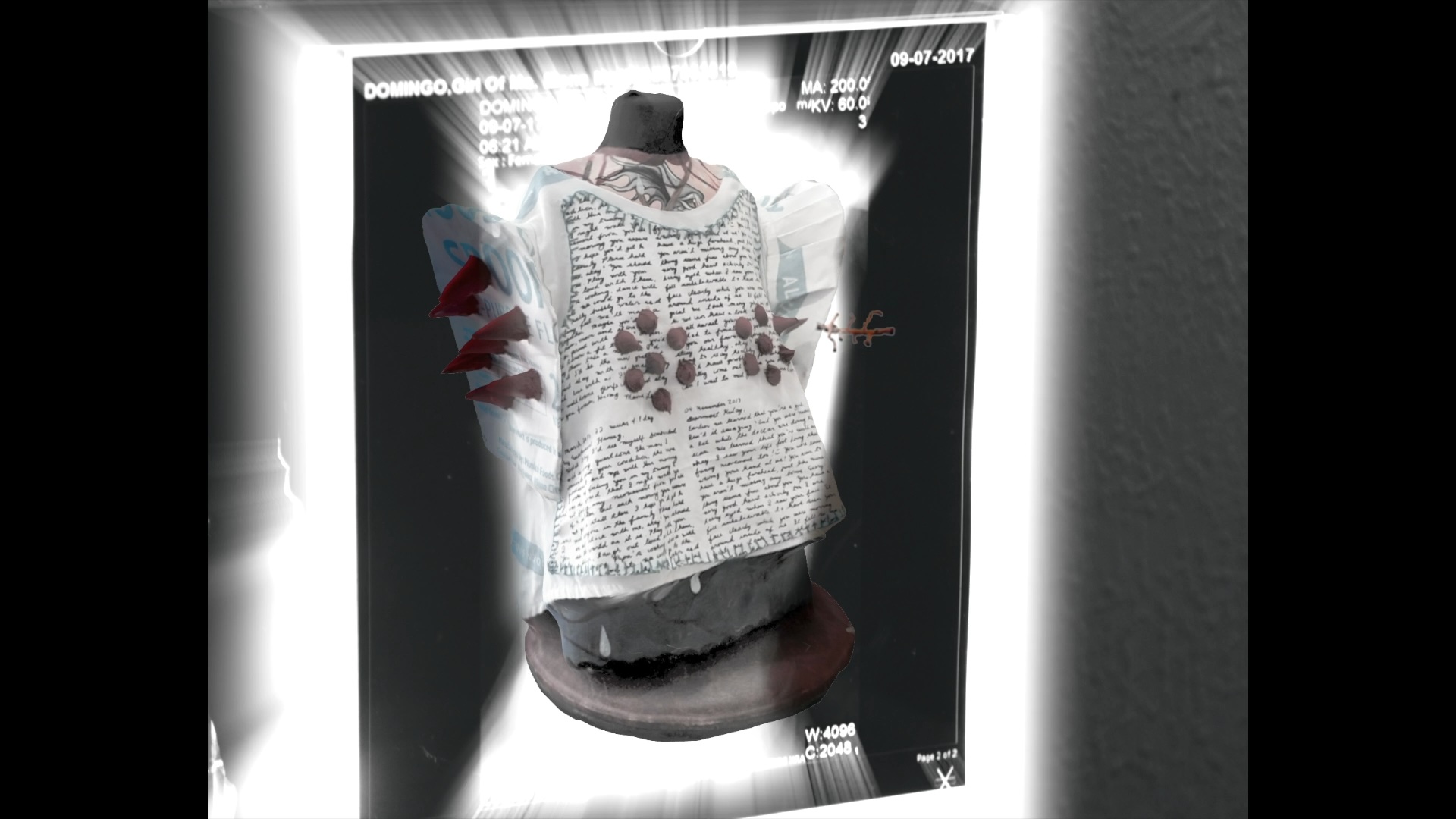
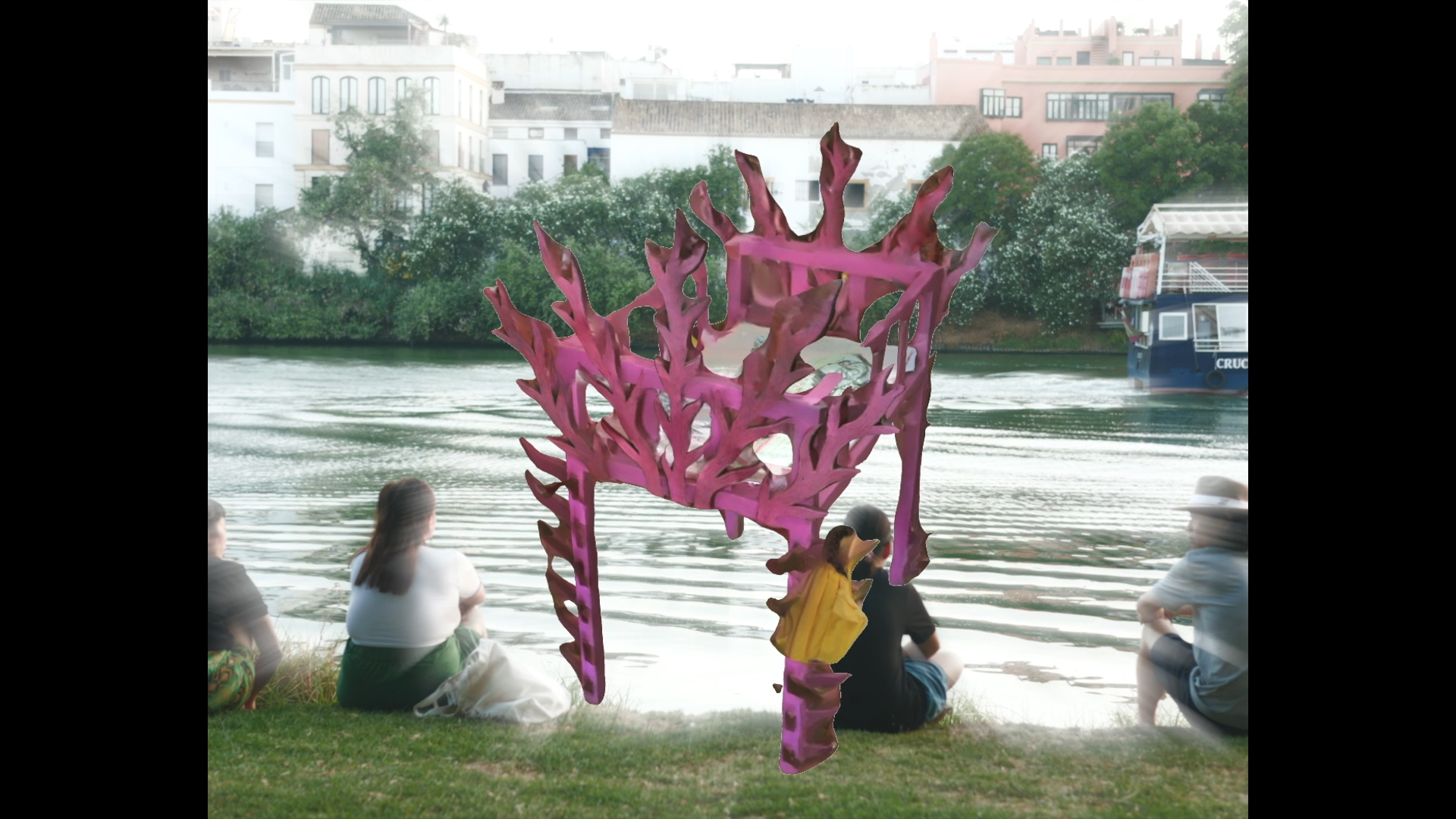
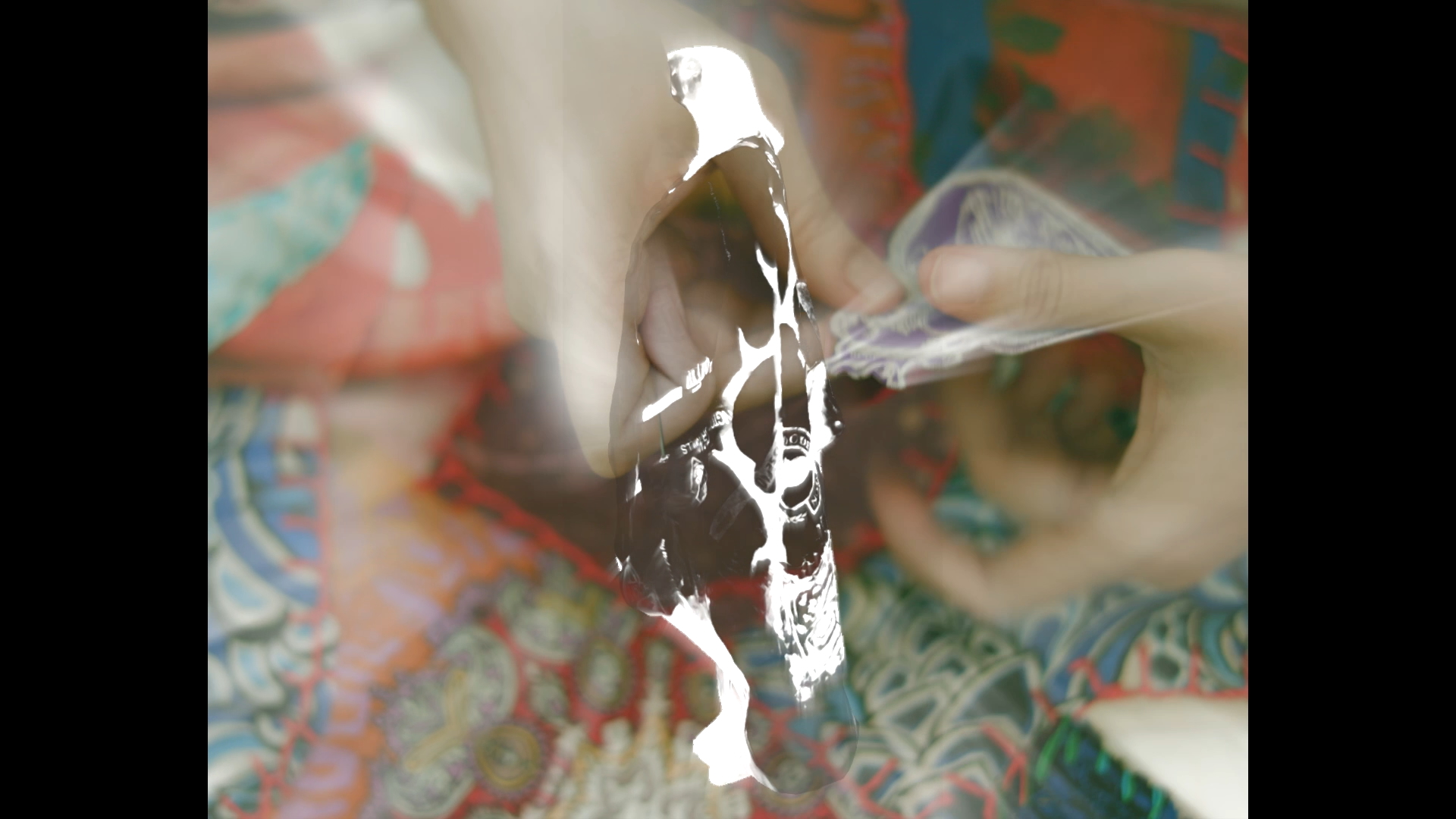
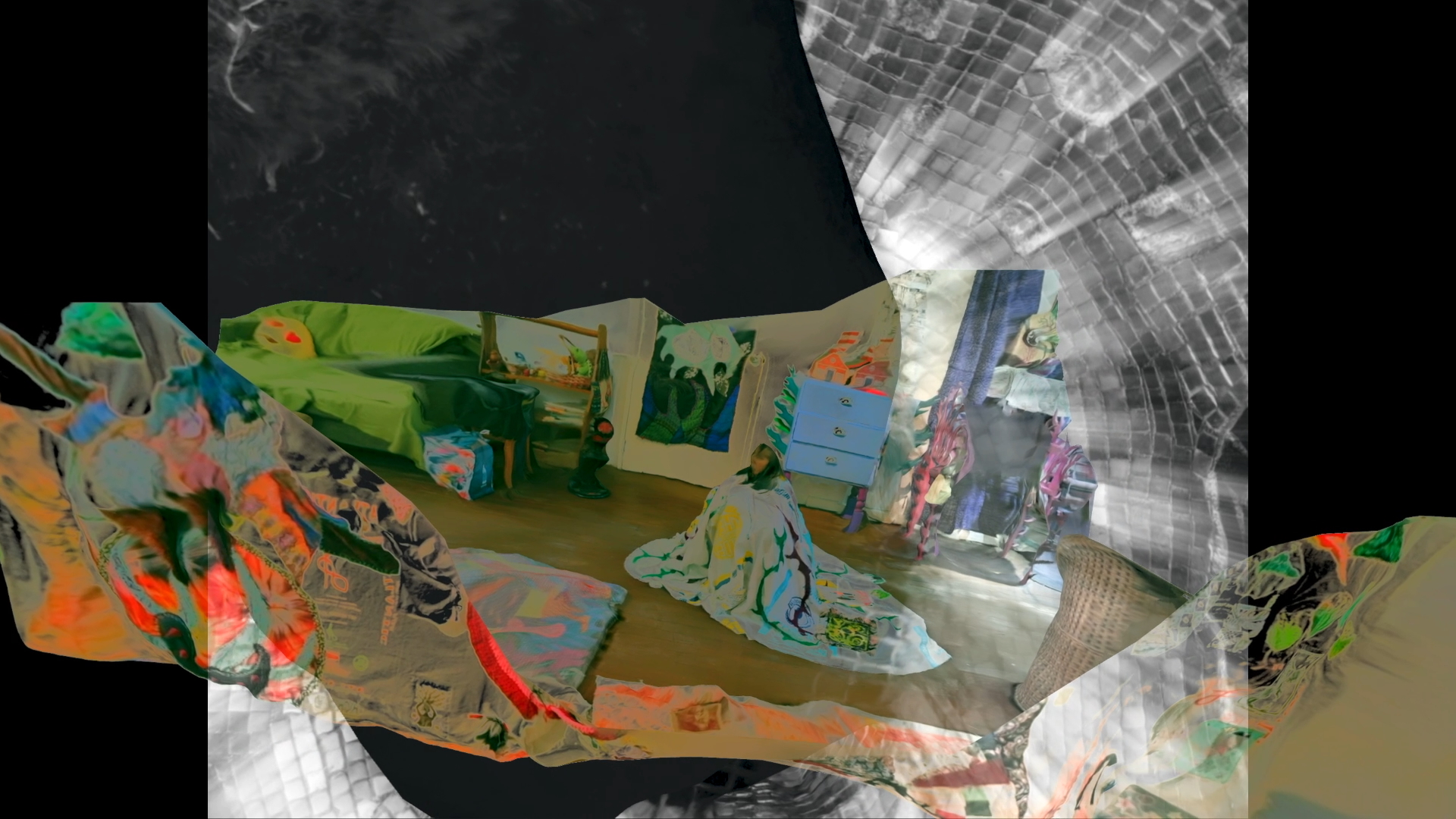
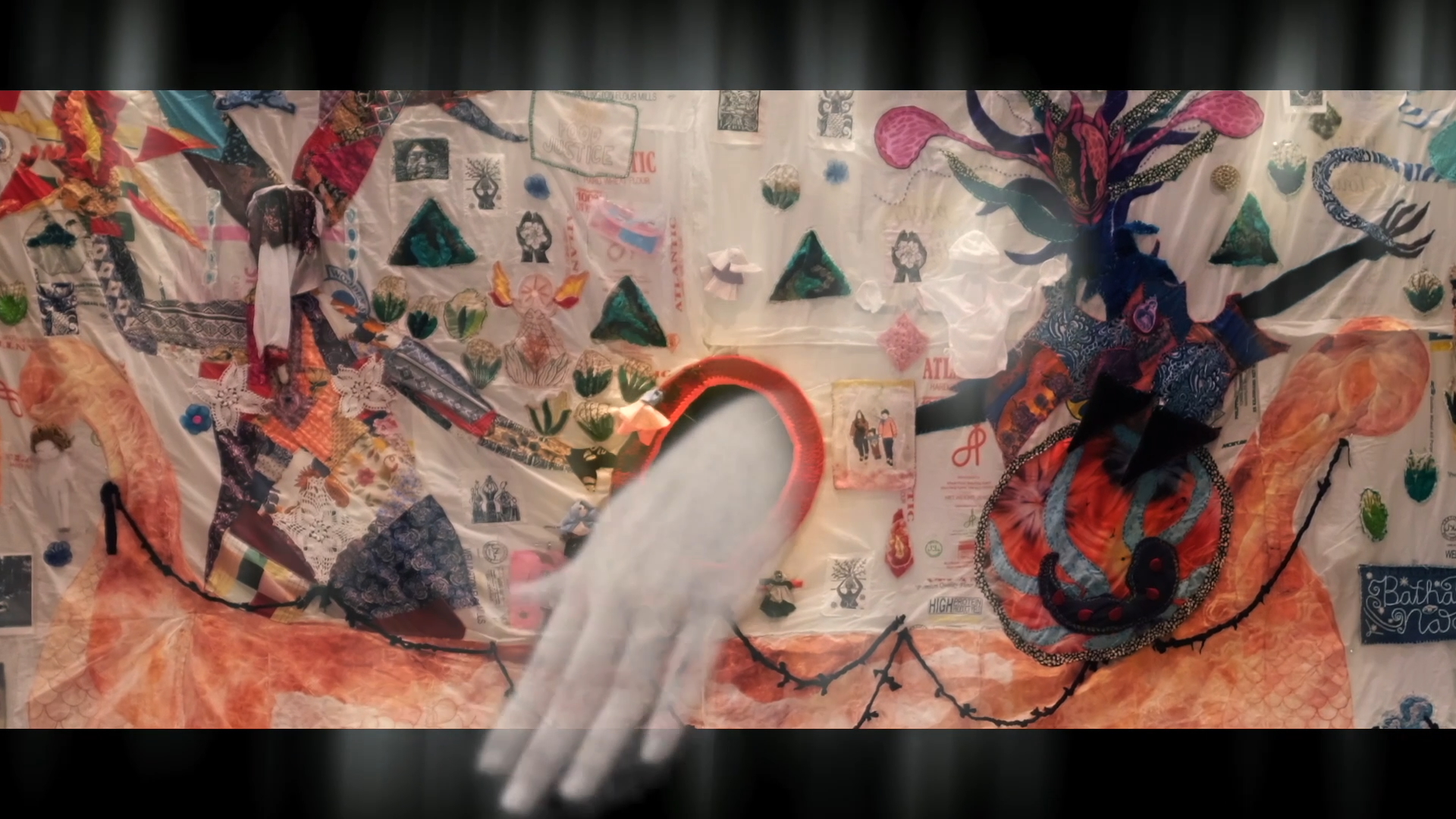
| In scanning the home, we discover voids. The artworks within the home unveiled ruins—a tattered opacity from the ground up to the body. Unlike the blurred faces we encounter on the street view mode of Google Maps, the scans bring us to the realm of the eerie—faces turned into cyclops—thwarting exactitude. Looking closer, the scans present an open cavity of the object from below, from which it fills the gaps that appeared unreachable and subterranean during the scanning process. These gaps become portals to the virtual world lending contrast to the opaqueness of corporeal bodies in real life. | 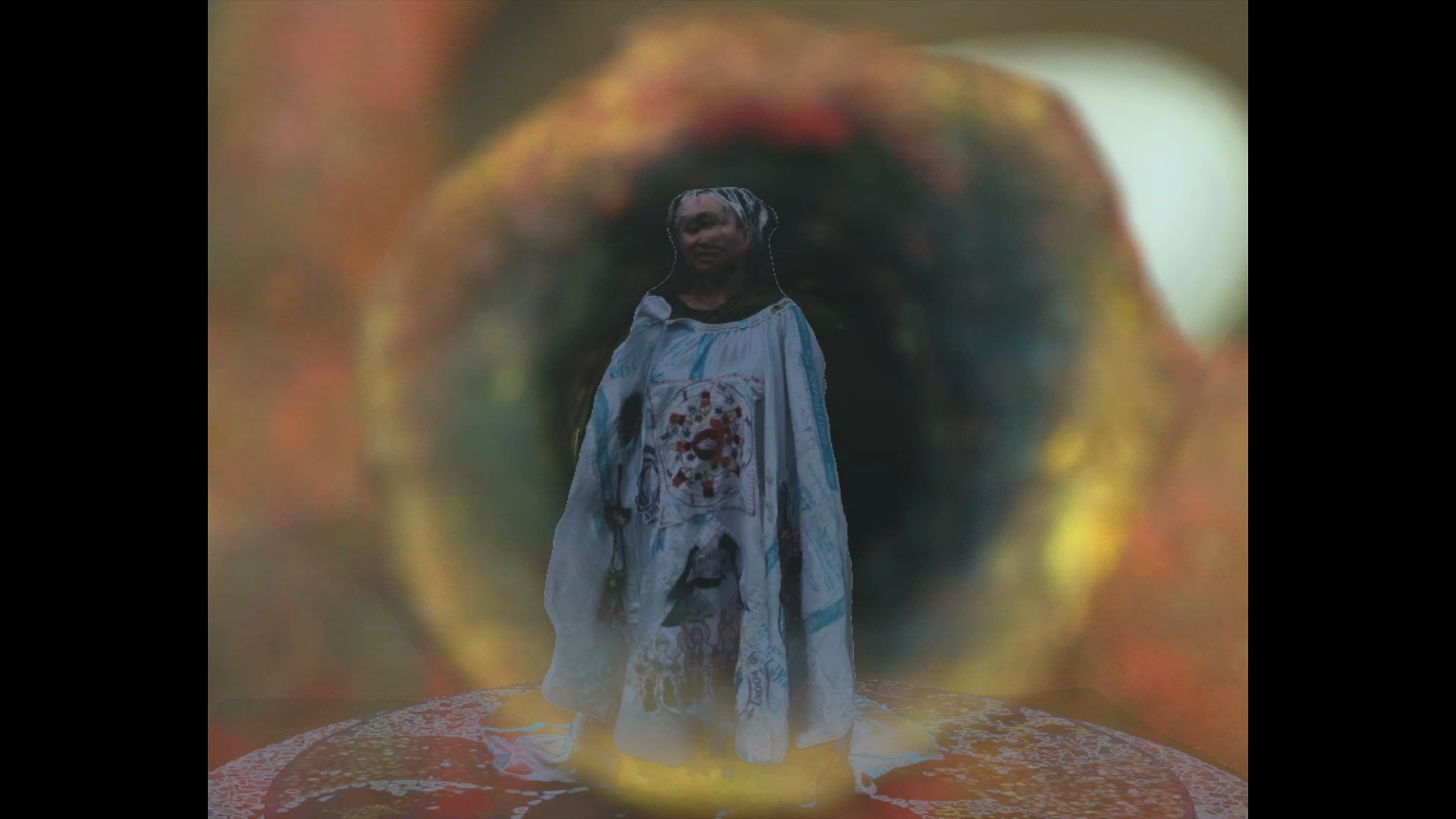
|
As we move into this understory, we find the quilted skirt mirrored: the eye is trapped in its kaleidoscopic bowel, epitomising the lacuna of an organ brimming with content. What do these point cloud models represent in their apparent exactitude? What do they achieve or fail to present in their liminality? A swarm of memories, ghosts, warmth, sleep and fatigue, the home reveals itself in estrangement--one from within but also fabricated through the artworks made from a collectivity of hands. The choice to come up with this microseries comes from a desire to inhabit the homes which contain the featured artworks, meandering to different places to find home in rivers, parks and other outdoor spaces. Moving images meld with catatonia of scanned figures, scanned bodies. Manifest in both forms are incantations of tiredness that disaffect mothers from the home. It is an estrangement on the scale of the global south and in the context of a Philippines where abortion and divorce are still illegal, housing backlogs mark uncertainty, climate impacts heighten, and public services are spliced through by structural adjustments or systematic corruption. Carrying the weight of debt wrought by aggressive shifts to a neoliberal economy, the home crumbles right within its own showroom. We are presented with fabricated hierarchies of homes where some have rights and others don’t, some lives are valued and others disposed of, some are summarily bombed in keeping with the phantasy of birthright claims, for land speculation, oil, and settlerism. Climate migration is on the rise with forest fires and floods. Thus the attempt to rebuild may also posed as most urgent, especially after fragmentation and intermittent displacement.
Time is askew and it is this that binds mothers in survival and work mode that renders care born under alienating conditions. Creating freely thus becomes a summoning of life-tearing time from its own wound state, in an extraction against. The body, tired, elates from its infrathins, its dissociative thoughts in the middle of a chore that culminates, mineralizse and later on hyperfixates in an embodied flowstate set to a choreography of ideas emerging from the anti-studio that stands as the totality of home.
The art reveals the sense of collectivity forged in such spaces. What we call The O Home emerged from this seed of mothers bringing together communities in shared struggles bound in the act of art making. What does it mean to reveal this sense of collectivity? To reveal—apokálypsis— leans towards the drastic, the end, or the catastrophic. The home has gone through numerous tectonic shifts based on the alienating force of wounded time. To rebuild becomes ever more crucial—it is unhomely but just as necessary to keep at. If the path to home is through this collective rebuilding, then our capacity to care for each other must be constantly examined as the primary offensive. In that way we abolish the myth of an indefatigable mother who manifests in the woundedness of time and patriarchy. To rebuild is to reclaim the social infrastructures that we have been deprived of. It is precisely for this reason that we partake in the global ruptures, to divert the resources of the world to more regenerative models such as that of feminist worldbuilding where freedom from debt, climate and agrarian justice, more access to the commons and public services all help us regain the life where these capacities can be had in their fulness. While we take action in these commitments amidst ruins, what we call home is this sense of collectivity as practiced, revealing a consensus for everyone to produce life-times in the duration spent together. Repair. Whether on a picnic mat or in the streets, these dreams find their way through an embodied rehearsal of the future, encouraged by each other’s active journies despite the limitations we find ourselves in.
Pinagtagpi-tagpi ang Pinaglalapit at Pinaglalayo na Liwanag at Dilim sa Ilalim ng Kandilang Naghihingalo Subalit Nagpapatuloy pa rin
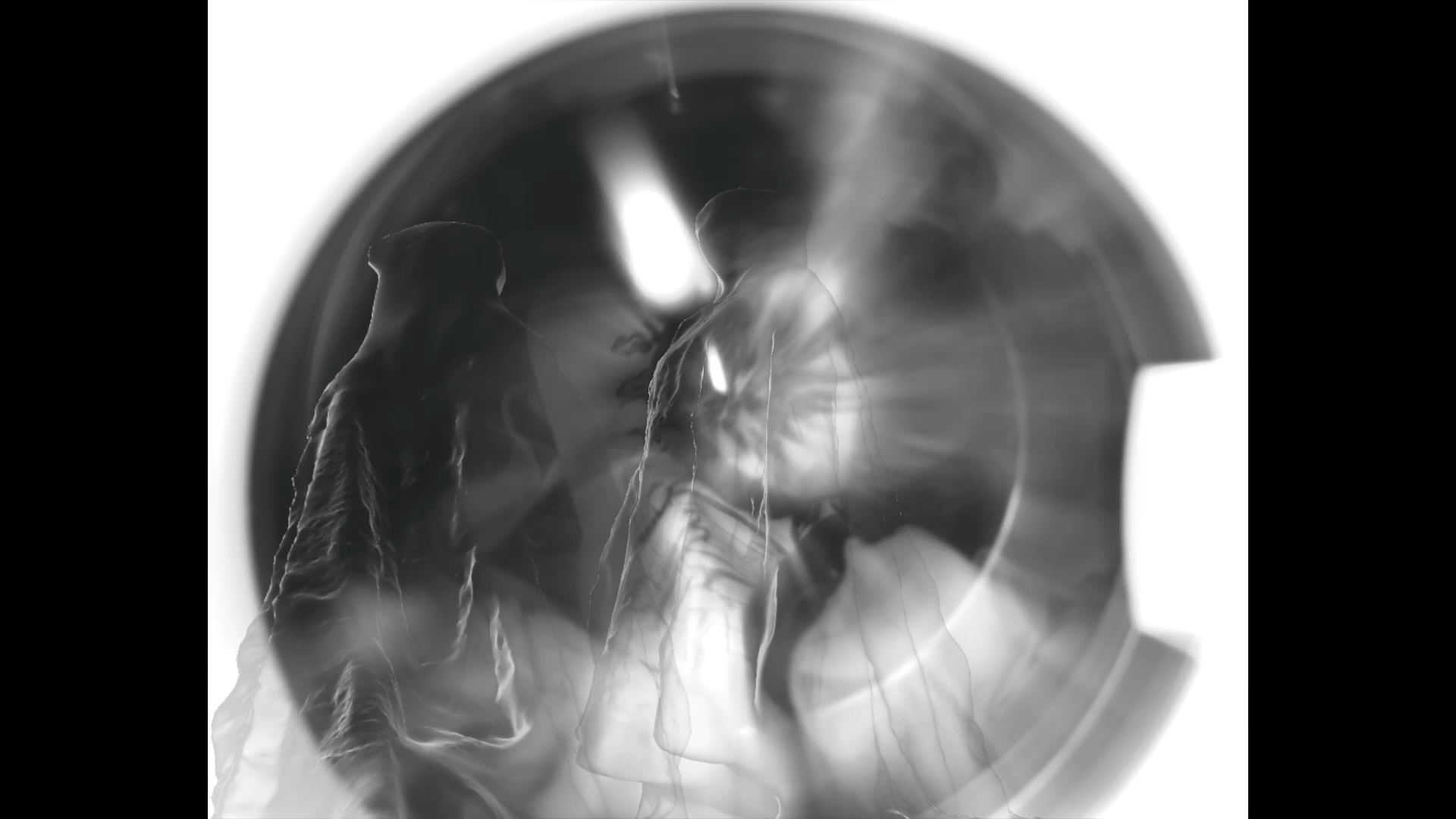
| When the dreamer is an obnoxious and corrupt man, women are not able to sleep and call it a day. With their souls diminished, they seemingly remain as living clothes spinning and drowning inside a waterless washer, until they are hung out to dry and wrinkle. Robbed of nature, feeling, and breathing, progress withers quite faster than repeatedly rehearsed tradition. But as the act of living together stops becoming a performance, women begin to disrupt all scripted breathing and see how Father Earth reacts. Cultivating a weak duplicate of growth, nutrition, and care, the patriarchy navigates the world it manufactured with unease while being enthroned on a destructive hold without even being held. | |
| Pursuing this project as a microseries, fermenting art pieces and footage were treated as crumbs that may either lead to starvation and a desperate return to content creation, or to re-appreciation and rebuilding of a wreckage that may be applied to one’s nonvirtual home. The videos were never meant to explain and spoonfeed. As is, they may be experienced as digital fragments that are so alienating and bombarding, the viewer is expected to finally turn away from their screens and start noticing what’s readily raw around and within them. Perhaps rather than being a virtual portal that “connects” one to another, a screen showing an all-knowing website is nothing but a dead end. | GagaThe Fool: This card acquires a poesies of gender found in the late Filipina artist Brenda Fajardo's folk and expressionist rendering of the tarot as it is translated to Ang Gaga. The set occupies a display of Philippine historia in Fajardo’s own surreally contrasting images. She and her work might be seen as one among several feminist progenitors. At times, her work in translation adheres to a sense of the vernacular rather than the literal: 'The Priestess' is churned to the ritual specialist Babaylan, a shaman as many would say. |
We could conjure a reading of these cards immanent in Fajardo's paintings, Cards of life – Women’s Series (1993). The paintings center women as main figures in significant historical events with the cards running on the pictures' sides dialoguing with each timeframe. Though Ang Gaga pretty much retains important elements from The Fool's pictorial language (the stick, the flower, the dog and the sun) we read her as one caught in the heaves of colonial takeovers, dispossession, grief and madness. We do not set upon the atomized/medicalized condition but reckon madness as relating to fraught environment. Amidst the colonial ruins, its regurgitation as trauma and ghosts possessing the present, Ang Gaga swirls above the normative, patriarchal domesticity as she chooses her path daring to look at the sun in front of a cliff. Fajardo attributes Ang Gaga to be her “personal symbol…It is a comment on the fact that women can aspire toward and to some extent control their destiny instead of just accepting the circumstances that pull them down.” Its number, zero, sets it apart from the rest of the trump cards arranged according to roman numerals. She is a disruptive element yet also the fertile ground where things emanate. | |
O26/8/23: The O Home opens with its first show Ang Mga Gaga: Sukdulang Pag-ibig “We are Len-Len and Yllang. We're both mothers and in the middle of mothering, we create. We'd like to welcome you to some space we call home. It's rectangular in shape as it's an old apartment, but hopelessly romantically speaking, it's beautifully round, like a mother's womb. A circle is such a magical shape, isn't it? It's a vessel, a nest. It's infinity, a circle of life. It's solidarity, a community. It's that basic shape a child draws to make a face, her mother's face, or the sun. It's the circle we form by holding each other's hands during play time back when were children. And speaking of children, they are welcome in this warm and welcoming circle. We think it's a lot of fun to see this circle getting bigger as time goes by. We aspire to share this circle as a nurturing space with fellow mothers and their children and people who identify as mothers (we believe there's a mother in all of us), and all of you who believe mothers deserve a strong support system, so we could keep up with the demands of this world.” |
Tupi/TuboA mat is a meeting place. It is open when in use. Before/after it is folded. To unfold is to reveal, to give, to trust. Folding in, we embrace the many facets of our being; many other folds; many other worlds. We see the collapse between folding and unfolding—sitting on a mat—as solidarity. The turning and writing of one’s experience into pages—creating zines to share or keep—a foldarity. To savor a meal under a canopy of trees, the air we release spliced as they take in the carbon and give back O²—this is the fold, the pipe, or the growth. Our lungs contain bronchioles mimicking tree branches. Growth can be an encircling of winds. |
AmihanClimatic seasons vary less in the tropics. This climate, however, is still interconnected with the realities of other hemispheres. The northeast monsoon, for example, carries cold winds from north of Asia. It is associated with the goddess Amihan. The Goddess in pop cultural depictions though Amihan’s gender maintains their ambivalence in traditional cosmologies. Can we say that these cosmologies passed on orally from generations are an anachronism in our times? How do primetime fantasy shows and school activities help fabricate these inherited memories in the environments of today? What could Amihan’s state be in lieu of today’s planetary crisis, with the effects of unsustainable growth, climate impacts and militarization happening in localities? What if, to extrapolate further, as they had lost their abode and descended to other bodies due to the relentless destruction in the past—how would one channel Amihan to the present? Could this be a kind of circularity that the Earth conducts to mend catastrophes that have taken place on the planet? A transference of geological and phylogenetic pain, a sort of divine madness or irresistible call to commune with mountains to protect the vast alterities of life. The result is a shift going deep into the fold to harness abundance, from individual to co-dividual modes of relations, to again unfold, creating and mothering. Monsoon winds fuse with their cool breezes soothing. We see the role Amihan occupies in Philippine memory/mythology as ambulant to today's real: an intercessor between warring gods of the sky (Bathala) and sea (Aman Sinaya). With the warming oceans brought about by capital’s many-headed hydra, the drones and the dredging, they are machines utilized for imperialist wars to displace racialized lives from their own land and tap in gigantic amounts of resources or reserves until this very day. Amihan groans with rage, but this too is a laboring for another world to be born. The task is big and the winds howl. They soothe. |
Paper Dolls
Celebrating their first year, The O Home launched a show together with friends, family and political prisoners. Reminiscent of the very first exhibition, Pistang Gaga this latter outing adopts the theme of paper dolls to encompass the engendering role of art and fashion in early upbringing. The exhibition critiques the manner in which paper dolls are used to impose notions on women, locking them to particular norms in conformity to social expectations such as those associated with a bride, the domestic duster of a housewife, or corporate suits of empowerment. A paperdolls-making workshop was also conducted at the Correctional Institution for Women among political prisoners. Some of these are mothers who hail from islands far away. During the workshop using customized paper dolls as surface, they were able to write letters to their loved ones. The dolls took various shapes and colors. Hairs morphed like clouds, their backs came with arching wings. They were sometimes faceless, marking the exhibition’s posited antithesis to top-down actualizations. The works highlight both the desire for justice and freedom through the queering of paper dolls. The exhibition Pistang Gaga dedicated itself not only to the people involved in artmaking together with The O Home, it also celebrates the living fire carried by fellow women and mothers in the forefront (as environmental defenders and human rights workers). Together with Free Our Sisters, Free Ourselves network, we have been visiting these women to offer support and help in lifting their spirits. Some have been granted freedom after many years, the others continue their fight. A week after Pistang Gaga transpired, the paper dolls flew to Thailand for the Asia Pacific Feminist Forum. There, the O Home facilitated a workshop titled Amihan Monsoon Medley: Unwinding Catastrophes through Atmospheres of Art, Music, and Kinesis which included paper dolls making, painting, singing and jamming. We shared the works of political prisoners to human rights workers, journalists, and other participants who joined the workshop. These new paper dolls took other queer forms such as an anthropomorphized elephant, a single-eyed cyborg and diwata (goddess). In the workshop poster we visualized Amihan as a fusion of Yllang’s Kaluluwa ng Mabuting Ina print and Len-Len’s collage diary to invoke the bestial, enraged by the multitudes of weapons, militarism and their climactic effects. Despite this tone, the work gathers everyone on banig mats to settle, unwind and tell each other stories of revolt from each participant’s location, seeing how they naturally interweave with those of women political prisoners in the Philippines. The murmuration of dolls continued their flight to different vicinities: in Chiang Mai for a spontaneous exhibition with a drag performance, the annual Sining Amihan organized by the Rural Women Advocates, and in Taiwan for a migrant cross regional gathering in Taipei. This is one of the meteors of possibilities we have witnessed for over a year in doing such practices of artmaking, mothering, and care for our allies, friends and the environment.
Related pages
Share a Reflection
log in to share a reflection.