
The following conversation—like many conversations and interviews in this anthology—exists between two registers. On the one hand, it is a formal contribution, undertaken for the purpose of publication, on the other, it is a document of collective remembering which moves with the meandering flow of conversation. Read or watched across these registers, we are given insight not only into the history and practices of Womanifesto, but the intimacies of recollection, maintenance and production.
Suggested citation: Varsha Nair, Nitaya Ueareeworakul and Phaptawan Suwannakudt, '"The Womanifesto Way": A Conversation between Varsha Nair, Nitaya Ueareeworakul and Phaptawan Suwannakudt', in Low, Yvonne, Varsha Nair, Roger Nelson, Phaptawan Suwannakudt, Nitaya Ueareeworakul and Marni Williams, The Womanifesto Way, Power Publications, Sydney, 2026.
Varsha Nair (VN): Hey.
Nitaya Ueareeworakul (NU): Okay.
VN: Now you're on.
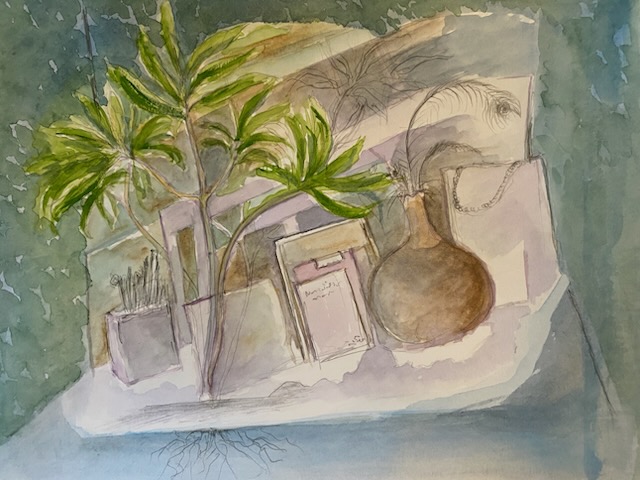
Phaptawan Suwannakudt (PS): In the zoom app, I always have this background
NU: What's your background?
PS: It is actually from the studio that I moved out of. One morning when I came in and there was this light coming through the grill and reflected in that corner. I quickly took that picture and I use it now.
VN: So, how's everybody? How are we going to begin? I mean, we were talking about the ‘Womanifesto way’ and I think we need to go back. We need to go to the very beginning, in one way. I thought one thing we could do is start to write, for instance, about one memory attached to being part of Womanifesto or the planning of Womanifesto. What do you think?
I was thinking back about the first time that we started to work on Womanifesto, and what I remember is how, the time we were meeting at Baan Chao Phraya Gallery, and we would go for lunch to that Muslim restaurant. That was so special. The food was so good, and I remember years afterwards, when I went back to that same restaurant to eat the same food, somehow it didn't taste as special.
NU: That Muslim food. Yeah. With me, and Phaptawan.
VN: No, not Phaptawan, you, me and Khun Ark Fongsamut
NU: Hmm. Wow. You have such a good memory.
VN: That was one memory, the other memory I was trying to recall was maybe a dinner either in my house or at your place Nitaya (Tuk)
NU: Oh, yeah. With Pantini in that little wooden house, yes.
VN: I remember talking a lot with Itō Tāri that day, really getting to know her. However, I can't remember what we talked about.
So, I was thinking maybe ,Phaptawan, or you, Tuk, will have a memory that is attached to the early planning of Womanifesto and participating in it. But by then you, Phaptawan, were not there, you were already in Sydney?
NU: Yeah, but I remember Phaptawan also visiting this house when her son, Chaisaeng, was so little. I have the picture of Phaptawan and Chaisaeng in the same house where we organised Womanifesto.
PS: Yes, I left in 1996, but came back briefly that year, and I think I went to meet Tuk. But in 1997, when the first exhibition was up at Baan Chao Phraya Gallery, I was pregnant and the baby arrived in November. So, that's when I missed all that: the setting up of the exhibition and the installation. Later on, I came back when Chaisaeng was two months and a half.
VN: Because Womanifesto happened in March on International Women's Day, right? The first exhibition, so you must have had Chaisaeng in November and then you must have visited at some stage after that.
But I mean, I was thinking more than about memory, also more related to the planning, how we made certain decisions for instance, Tuk I also remember…
[John Clark appears in Phaptawan’s frame]
VN: Hello, John! How are you? It's very it's very strange with this virtual background how you popped in and out, and your hair is doing funny things John.
PS: John is just delivering plums.
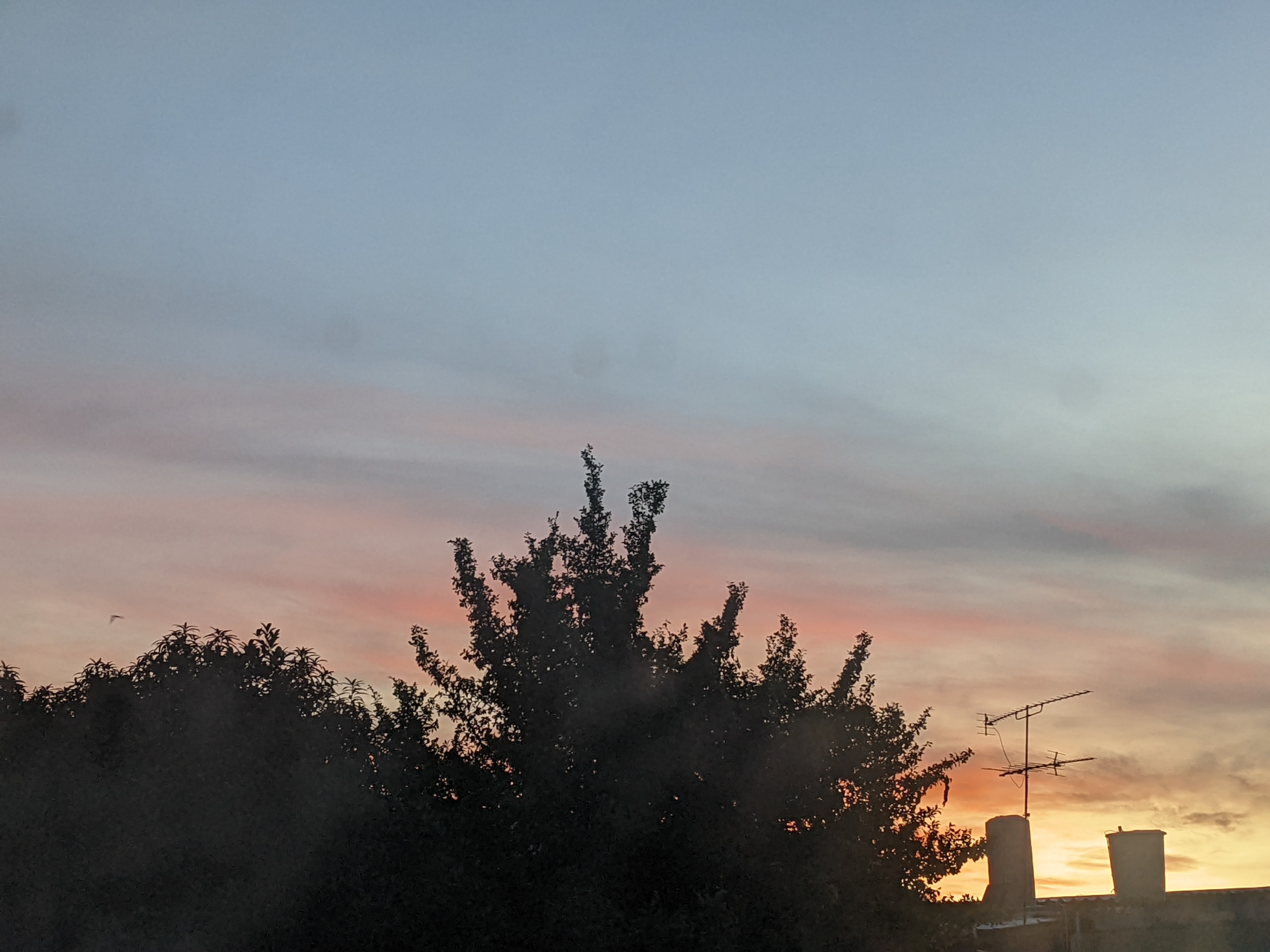
John Clark (JC): Happy given the situation. Lovely light outside tonight, golden Light under rain clouds is beautiful here in Sydney. Very beautiful light. Have you spent any time in Sydney? Not just for quick visits?
VN: I know, each time I've been there. It's something different.
JC: It's something amazing. You don't even have to imagine the harbour.
PS: As you mentioned the light, I will quickly go and take a picture
VN: Yeah, we need pictures for our documentation, so take as many pictures as you can.
JC: Has Phaptawan showed you the new studio?
VN: No, I think she's taking a picture of the light you're talking about.
JC: No? Because the studio is really beautiful.
VN: It’s very nice that she's got a studio now at the bottom of the garden. It's not only nice, it's necessary, actually.
[John steps out of Phaptawan’s frame]
PS: I'll send the picture in…
VN: Yeah so, what's interesting is to think about how we went about doing things. For instance, I remember we were looking for funding and meeting people at the Japan Foundation, and for the first time I realised that they were very interested to know how many Japanese artists were involved in the project. This was my first exposure to one of these organisations. I thought to myself: ‘aha, they will only give you money if their country is represented and, no funding body or nobody will fund you unless we somehow meet their agenda.’
I actually remember this conversation with you, Nitaya: ‘Ok we get funding, but they [the Japan Foundation] cannot tell us which artists to invite, we are already inviting Japanese artists, but they can't say: “we will fund you only if you invite this person or this person.”’ The next conversation we had was that no matter what funding we get from whoever, we will make our decisions independently. That we will work the way we want to work and we will plan the way we want to plan, we won't let them interfere.
Another memory I have is when we went to Bangkok Post, they actually printed the catalogue for us. Do you remember?
NU: Yeah. We got the connection from Khun Ark Fongsamut
VN: They printed the catalogue for us, and I think their logo is on the back.
And I think it was the same thing at that time, deciding where should the logo go? and how big should it be? or how small should it be?
What was really important were the artists who are participating in the project. So, it shouldn't be about the logos of these funding organisations like Japan Foundation or Bangkok Post. But, of course, they had to be acknowledged, we were grateful for whatever funding they gave us.
Well, Bangkok Post didn't give us money, but they agreed to print the catalogue, which was huge. Japan Foundation gave a little bit of money I seem to remember.
All of these decisions led to coming up with the design for the catalogue where we asked for everybody's hand print for the poster and for the front of the catalogue, like saying, ‘here we are, the women as the artists.’ So, it was very important for us, I remember this very clearly, that we were on front page and we were really marking our presence, we were saying ‘here we are’.
Thinking back on some of the core things, I think the first steps that we took in planning, why and how we made certain decisions, we instinctively knew—and we were, of course, very independent minded and we have to do things our own way—not to be dictated to by a gallery or by a curator or by somebody funding us.
VN: Before we continue, I'm just going to take a photo out of my window, so you can see what the light is like
Tuk can take a photo out of your window, and we can see all the light. It's quite nice to have this kind of documentation of what we're looking at outside the window.
NU: I will take a photo of the sky later.
VN: Or you can just take a photo of where you're sitting, of what you're looking at.
PS: I used the view that is right in front of me, that’s the photo that I shared
[Nitaya gets up the take a photo]
VN: Yeah. I think Nitaya has gone for a walk
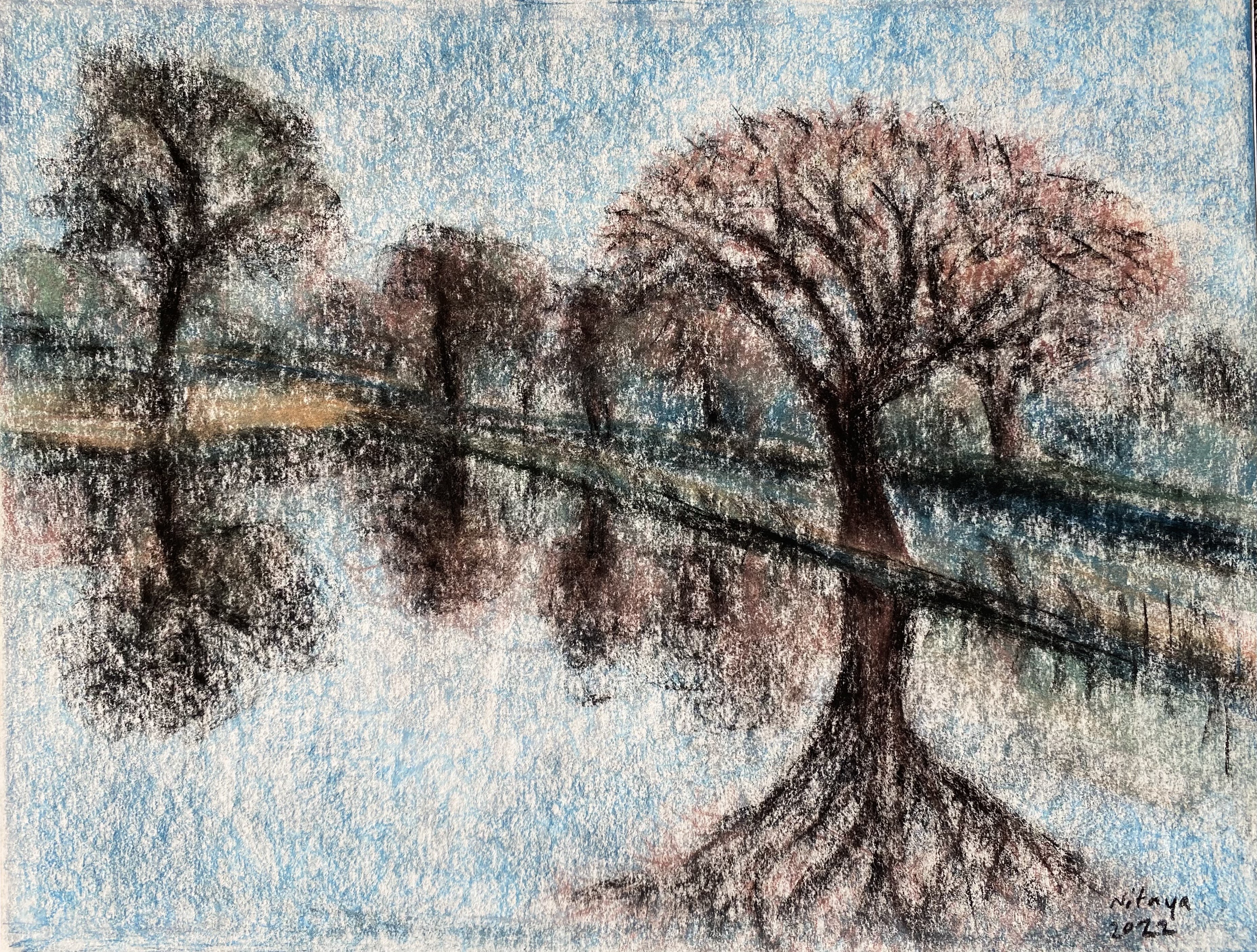
VN: Ah, she sent a photo, very nice, is this what you're seeing Tuk? from your window?
NU: Yeah, from the outside. I just went outside and took it, because there are too many things in the room.
VN: Nice. Okay, now we’ve gotten into taking photos and sending to each other—we're not interested in zoom!
PS: How interesting it is, when we are talking about the Womanifesto way, we get distracted by food, by view, by the light. Everything.
VN: Yes, I think that's also such a big part of the Womanifesto Way. Let's really fast-forward from the first Womanifesto planning, to now, the last the residency project. Phaptawan, you were part of that planning as well, where three of us were together. This is the thing about how we work together, I don't think we have ‘meetings’ like meetings are understood, it was like this, as you say, we get distracted by the food, by the light.
PS: Varsha, you always had a camera, right? And in fact, we all carried cameras. But I remember at one session, we were in the kitchen and then you went off to take this video or picture of this creature, like ants or something on the bark of a tree trunk.
We were fascinated by that, and then we started looking at it and you were just like, ‘oh, I have to take this picture’ and you made a video. It was so fascinating; it was like a group of insects and they kind of dispersed.
I remember that picture. But when you mentioned the residency, and how we get distracted, that is one of the things that you went, ‘oh my god, I have to record that’, and I remember the way this group of insects dispersed away.
VN: I have a vague memory of that, but what had happened after the residency is that my computer crashed. I lost a lot of the photographs, a lot of the material, and you had to send me all your photographs and materials. I actually lost everything that I had, except I think when we were at the residency, I saved some of the photographs, we created this pool, right? We said ‘Okay, everybody with photographs, please share’. That's why some photos that I took survived.
Fortunately, that video I made of you rocking Jumong is the cradle where you're singing, that survived.
NU: Yeah.
VN: I also remember, later on, when I was editing that video, I think I made you sing separately because I had recorded you but I lost it all. But you came to Bangkok and I made you sing again and I recorded you.
NU: Yeah, I remember that, I still sing that song.
VN: I have it, I listen to it sometimes, I really love it. You know, the work happens very much as part of the whole team, it isn't this thing like, ‘Okay now we are going to sit, now we are in our studio and we are going to make work.’ It just happens, like you are putting a baby to sleep or you're cooking or you're weaving….
I mean, especially on the farm, everything felt so organic, including the way we were working or the conversations that were happening, and the workshops.
PS: Yeah, and when we talk about it, we use the word residency, but actually it is a home, it's Nitaya’s home. So, I think that influenced how things evolved, around life on that farm.
That is one thing, but when you talk about fast forwarding from the first Womanifesto to the residency, I try to think about how we follow this trail of Womanifesto between us three. I was the person who was not fully part of it, even though I participated or sometimes I came to visit outside of the events to catch up with you both. So, speaking from my own position, in and out, I think that there can be a way in which each trail shows the life of each participant among us three. I think that is one way we can characterise it.
VN: In a way, every project punctuates a certain moment in our lives. One of the things you mentioned earlier, Phaptawan: while we called the farm a residency, it was actually Nitaya’s home, the first Womanifesto planning project, for me, was in Nitaya’s home, when I had just met her and I had started to go around to her place. I knew she was doing Studio Xang, the children's workshops, and I got to interact with this art environment. This was informing the planning of the project, and later on when we did the 2001 workshop and the residency, which included workshops with the schools and the University. It just made complete sense because it related to the first Womanifesto, and my experience of knowing what Nitaya was doing with Studio Xang, running these children's workshops. So, there is continuity, you know, things didn't just develop out of the blue, there was this underlying connection to what we were doing, how we were meeting each other and seeing what we did in our lives, not just in our art lives, but in our related lives, I would say, which was quite interesting.
What you said about the home is also really interesting because actually, Womanifesto is a home. It really was from the first project, starting in Nitaya’s house, the wooden house, and then ending up on Boon Bandan farm, which was also home, and every other project in between—it was always our home space, this was always a very important factor.
NU: That's true. I remember when I was in Kantharaluk, and every time I would have to go to Bangkok for the meeting with you, Varsha, I stayed in your home. So yes, it's the ‘way’—we feel like a family. When we work in the Womanifesto way, it’s like family work. We share with each other and create a warm atmosphere, I feel that you’re like a big sister and Phaptawan too, even though you have to live in Australia. But in my mind, you are always involved with Womanifesto, even though you live in Australia. It was so nice, when we went for the archive project, we lived in Phaptawan’s house, it’s touching.
VN: Yeah, one way or the other it isn't like—if you think about any other project—where you're getting together, with us artists, we are always hosting each other or caring for each other. In that sense, these things are above everything. So, of course, we talk about food first, or we talk about what are we going to drink? are we opening a bottle of wine? it's really a gathering around the table.
NU: Ever since meeting you, I can get the Indian cooking!
VN: And I think through you I learned to eat plain rice with fish sauce, and nothing else! I remember so clearly Nitaya saying once: ‘this is my favourite. I love this. I don't need anything.’ At some stage I must have tried it, and I was like, ‘hmm very nice.’
NU: Phatawan and I, we love that too.
VN: Yeah, actually, if you read Krystina's thesis, she talks about how we, at Womanifesto, have had a way or had a way of achieving projects that kept with the rhythm of our lives and our thinking.
As I said before, we never really thought of projects as, ‘Okay, this next one will be this and the one after that will be this and the one after that will be this.’ We literally would be talking, as we are now, and we would come up with an idea.
PS: I feel like the way you two think about the gathering, is that you want to capture all the things that happen when we get together without planning. To touch on what you said about Krystina, in her writing about Womanifesto as a project that ‘just happens’, the gathering is one such model that I could think through regarding the getting together. Earlier when Varsha said that Womanifesto was home, and Nitaya said that it's like visiting, I think that, for me, because I live away from what I called home, as in Thailand, there is something about the visiting, and hosts. In Sydney, for example, when someone knocks on the door and just invites themselves into the house, it's considered rude. But in in Thailand, even when you’re inside or outside the home you come together, we say: ‘come and have a meal!’ or ‘did you have a meal?” The gathering starts from something and then it grows, it grows from being together, hosts become visitors and visitors become hosts. That's how I see the pattern. There is no plan, if there is no plan, there’s no structure. You two think a lot about gathering, particularly during COVID at that time when we were separated and thinking about what we should do about the Gatherings project. The sense of gathering didn't come out of nothing, it came out of that pattern of visiting, of hosting, of welcoming and having a sense of community.
VN: Yeah, hospitality in a sense. Importantly, you don't define it as a definite word like ‘okay, now I'm going to be hospitable’, I understand that very well having grown up in exactly the same way in India, it's very open. If somebody arrives unexpectedly and it's close to mealtime, you make sure, you insist, ‘you're not going to leave before you eat with us.’ No matter what, it's not pre planned, it's not about what food you're going to put on the table, it's like, ‘Oh, you're here, we must sit together.’ Even walking down the road in Bangkok, I would meet this lady who was working in one of the shops, I would bump into her quite often, and her first question would be ‘have you eaten?’. It really is a way of being, isn't it? One which is very embedded in us, through our culture, through our interactions, through how we've seen it being done around us since we were born.
PS: Although I hate to say that it is a woman’s thing, maybe because you mentioned that it comes from the way we are born, there is a gendered base to these roles as well, even though we don't think about that.
VN: Oh, absolutely. In fact, what's interesting is what I saw in my own family growing up, every Sunday my grandmother without even being told, would say, ‘Okay, today, we have to make two times the amount of food’ because she knew that my grandfather would invite any passing person. He would be sitting out on the porch, and lots of people would visit him and then he would say, ‘No, no, you must eat before you go, you must eat before you go’. It was really up to my grandmother to prepare for that. This is another interesting point, I think we pre-programmed ourselves as women, so in terms of planning things, it's normal—it’s a role we just take on.
PS: That's exactly the word that I'm thinking of—this comes about naturally.
VN: Yeah, it's like, what's the big deal? You’ve got to plan for maybe 10 artists, you have to think about the food, like Nitaya had to for the 2001 workshop, when we first started to go to Kantharaluk and Boon Bandan Farm. We were planning and it was Khun Mae Pan saying, ‘Oh, my sister will come to cook’. We set up the outdoor kitchen, and we go make a list, go shopping to the market, we pick what we can from the farm, and next thing, we build some more bamboo huts.
NU: Yeah, naturally.
VN: Actually, we built the central sala and the bamboo huts out of the funding that we got. I remember you put aside I think 20,000 baht.
NU: Yeah.
VN: The toilets too. I mean, we set up the whole infrastructure for the project by being pre-programmed to manage, to juggle various things.
PS: Remember last time, when we were not recording, I said that, personally, when I think of something big, I get scared. When there is a big plan ‘we are going to do this and that and that’ I freeze up.
VN: Yeah, if you overthink things, then it remains in that zone of thinking about it and asking ‘what if?’— ‘what if it doesn't work?’ or ‘what if this happens?’, all the ‘what ifs’ come in—then you scare yourself into not doing it. But I think we were very like-minded in that, at least in my experience working with Nitaya, we're both a bit crazy. We thought really, really big without having a single Baht. We just got so excited with this big thinking and these ideas, then we just ran with these ideas.
We never really discussed this, Nitaya, but I think in the back of our minds or a comfort for us was knowing that we would achieve what we can. Our mindset was: ‘it's very good to think big, but do not completely set your minds like that, do not kill yourselves trying to achieve it totally. But keep in mind that we will do what we can.’ I think this was very important for really achieving things that are beyond what we had thought about, quite frankly. I mean, in terms of building this whole infrastructure on the farm and dealing with very heavy monsoon rains and even Yin Xiuzhen getting stung by a little scorpion. Remember that? Phi Muan took her to the hospital.
VN: And the hen who would fly into the bamboo hut only to sleep in Naomi Urabe's bed. Every time they opened the door somehow that hen was waiting and wanted to go and lay eggs on Naomi's bed, it was crazy. Also, I think there was a bit of a breakdown—Marita was very tense and had a lot of pressure because in the brief for the project it said ‘you don't have to make any work’, she freaked out about this. I think even Hiroko Inoue, one of the Japanese artists, she asked me two or three times ‘we don't have to make work? what do you mean?’ I remember saying—‘you don't have to make work, enjoy!”
Some people really got it, like Yin Xiuzhen, and she really enjoyed herself. Yeah, it was fun.
NU: Yeah, so many stories.
VN: I don't think we were thinking about breaking any patterns or anything, but it was this whole idea of a workshop where you approach the workshop differently. Early on, we had planned to visit the people in the villages, like the artisans who were weaving baskets, or fabric or mats, so we could visit them in their own homes, but we realised that instead of that, we should create this meeting point in the main Sala and get everybody to come there. I think that was such a good decision.
At first, it was a logistical decision, but it turned out to be the best decision, because that really created this generative environment, didn't it? So we didn't overthink it, we didn't think that we should establish this and then we should do that, no, it was just like: ‘we can't keep going to the villages every day and transporting 10 artists around to different places, it would be better for us to host everyone here on the farm, the artisans and the people from the surrounding village who would come every day to Boon Bandan farm and, of course, lots of cooking will be done but everybody will eat, everybody will talk.’ I did think at one time ‘what is going to come out of this?’ and I said to myself ‘everybody's having so much fun. why worry about what is going to come out of this’
And, Nitaya, you were keeping accounts?
NU: Yeah, that's my job, all the time.
VN: For the Heinrich Boll foundation. Yes, I know. I did it afterwards for the ‘No Man's Land’ project with them. You know, I think I might still have that file somewhere. I've been cleaning my studio, and I must have to look.
I should send it to Asia Art Archive if I find it, I have to look, because there are some boxes I haven't opened, and every single receipt for everything you bought, if you bought two pens and you got a little receipt for CDs to store data, whatever. Every receipt had to be pasted on an a4 sheet of paper and everything had to be punched and filed and the whole thing with the report had to be given to the foundation. I actually quite enjoyed that. It was like collage.
NU: The second Womanifesto—my god. Oh, my god!
VN: I remember, because you didn't get the money you had to borrow from your sister?
NU: Yeah, I think you had to get an advance from Studio Xang. That time was crazy, that time I had to do all the accounting, it was crazy. Yeah. Almost 30 artists and then the assistants. Wow. That was a big experience.
VN: I know. And I stepped away from that because everything had to be in Thai. I was just like, ‘arghh! I can't do anything’. I remember after that you said ‘no, forget it not, we’re not doing it again, not doing Womanifesto again.’ That's when I said ‘let's go, we can go for a picnic and take a break.
NU: Yeah, take a break.
VN: Then we drove to Boon Bandan farm in Preenun’s car, no, the first time we drove with Maitree.
NU: Yeah. We did a survey of the farm, and we travelled in Preenun’s car.
VN: That was a second time the first time I think we went with Maitree’s pick up van. Oh, maybe you were already there? But I remember going in his van.
NU: I wasn’t there.
VN: I think we went two times for the survey—the first time maybe Preenun took us or maybe we had two cars there was also Maitree’s pick up.
We realised it's very uncomfortable in the pickup van for six hours or however long it was from Bangkok to Kantharaluk. There was this wonderful coffee place we stopped at, what was amazing about it was the public toilet, they had a little openair garden in each public toilet with a little pond and Lotus, it was like the best piss ever. Naomi was there for the second trip too, she and I were sleeping in the mud house, in what we called the honeymoon bed in the mud hut.
NU: She's from the gallery?
VN: Naomi had come as curator in residence for About Café/Studio. This was towards the end of her stay in Bangkok. She was going to move back to the US and we involved her in the planning group for Womanifesto. So, it was Nitaya, myself, Naomi and Preenun, four of us were in the planning group. Naomi was there as part of this, making all these decisions, visiting the site and all of that, then she left, but when the workshop took place, she came back. She couldn't come back for the entire time but I think she came for five days or so. And then when we asked for volunteers, Nitaya, I think you and I interviewed the volunteers, or maybe you interviewed the volunteers? I think you put a call out in the art school or in the gallery or through asking friends. That's how we got Bee, Pat, Mint.
NU: There were two Mint, they had the same name.
VN: There was an architect too? What was her name?
VN: It's in the catalogue, because when we went to Phrae Viharn she explained about the architecture.
So, these are things which just happened. We didn't plan it, we didn't plan that we will have one volunteer who has an architecture background or anything like that. The world opened up, it was so nice. I don't know how much time is left. Because mine is not a professional account.
PS: I think we've got a lot of recounting.
VN: I think maybe plan that we have another two such sessions?
PS: And in between, you suggested, Varsha, that we can write as the follow up of the meeting.
VN: Yeah, I think so, I think we can each write up a short thing about what, according to each one of us, is this thing called the ‘Womanifesto way,’ for me there is actually no one Womanifesto way. The moment you define what the ‘Womanifesto way’ is, you're setting it in stone, the Womanifesto way is that there is no one way.
NU: Yeah
PS: Maybe we do another session like this?
VN: Yeah, I think let's do one more?
PS: It's really, you know, I have a feel for the energy, the energy of that moment - the energy of that moment and a sense of, of, not even having to push, but make it happen. Yeah. I feel that some time to write about it…..
VN: I think to write about it, to write 800 words or whatever it is 2000 words essay, feels very forced. Like I said to you, because I've written a number of different essays for Womanifesto, and I just find I will keep repeating myself. What is actually lost is this exchange of our memories and exchange of our little moments of how things came together.
PS: Telling this from different angles too, the memory may be shared, but the perspective is different. I think that these are clearer during the exchange, rather than when you write these things down.
VN: I think what also would be quite interesting, maybe next time, is if we each talk about what it was to be involved in Womanifesto, and the organising. Nitaya, you could actually talk about the very first Womanifesto when I was introduced. I was told about Womanifesto, this woman's art exhibition that's being planned and then in the next breath, I was told ‘well, but you know, they've been planning it for a while, so I don't know if these women will get it together.’ I won't name the person who said that to me, but that really made me sit up, and I was like, ‘how can you just dismiss it by saying “if these women can get it together”?’ You know, ‘what do you mean, “these women”?’ I think it's something all of us women understand very well: being dismissed because you're a woman, and people saying ‘you are not capable enough to get something together.’ This is what I'm saying, we are pre-programed, or we pre-program ourselves to multitask, we can do so much.
PS: I think it's a good point to reflect on how each of us were involved in, the projects, the events or in the action. We haven’t done that.
VN: Yeah, what it really means to us, what it meant to us at that time in our lives, as women and as artists. I think, looking back, you have different understanding, after years of experience and coming to this stage now, I have this other understanding of myself and why I was so invested, why I was so involved in it, you start to see it from different angles.
PS: Yeah, it's a good point. And since we haven't done that, I think it could unravel some things, and maybe it'll become part of the Womanifesto way.
Related pages
Share a Reflection
log in to share a reflection.